
DCE Records has a long tradition of making studio tools, templates and sound packs for internal use, now we plan to offer some of these to other artists. Here you may find online instrument editors, sample packs, VST instruments, max4live devices and more. Come back often to check as some remain in active development.
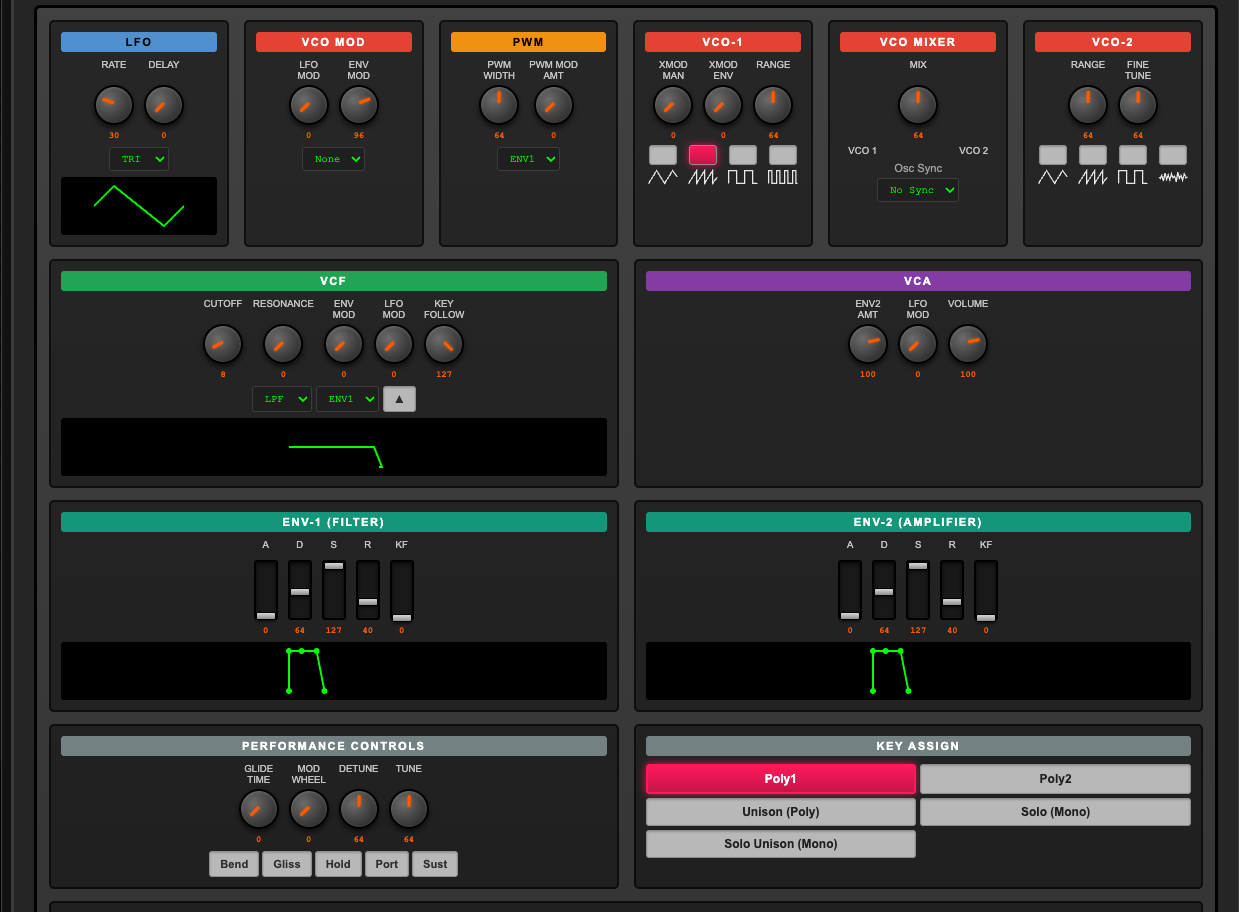
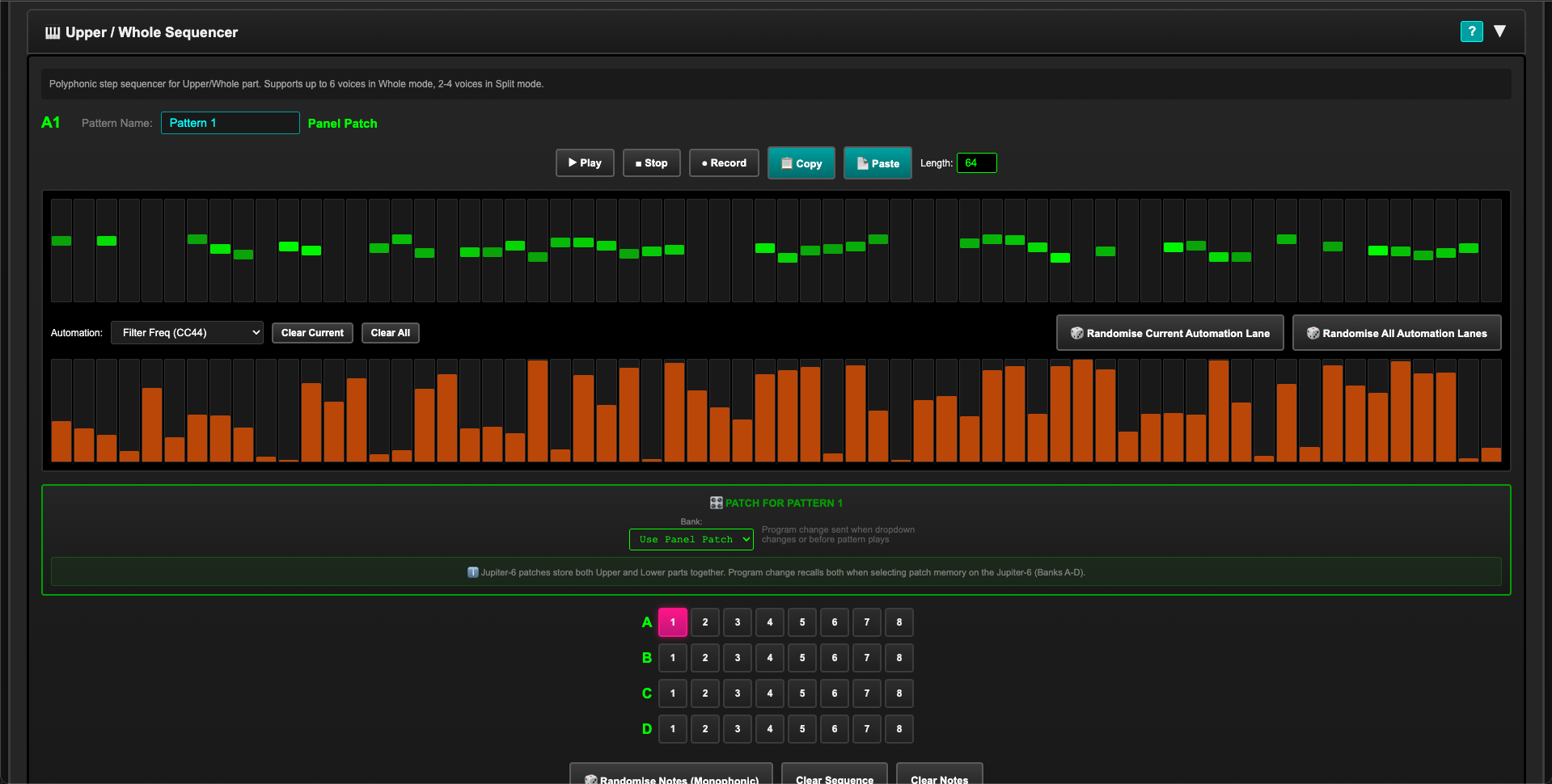
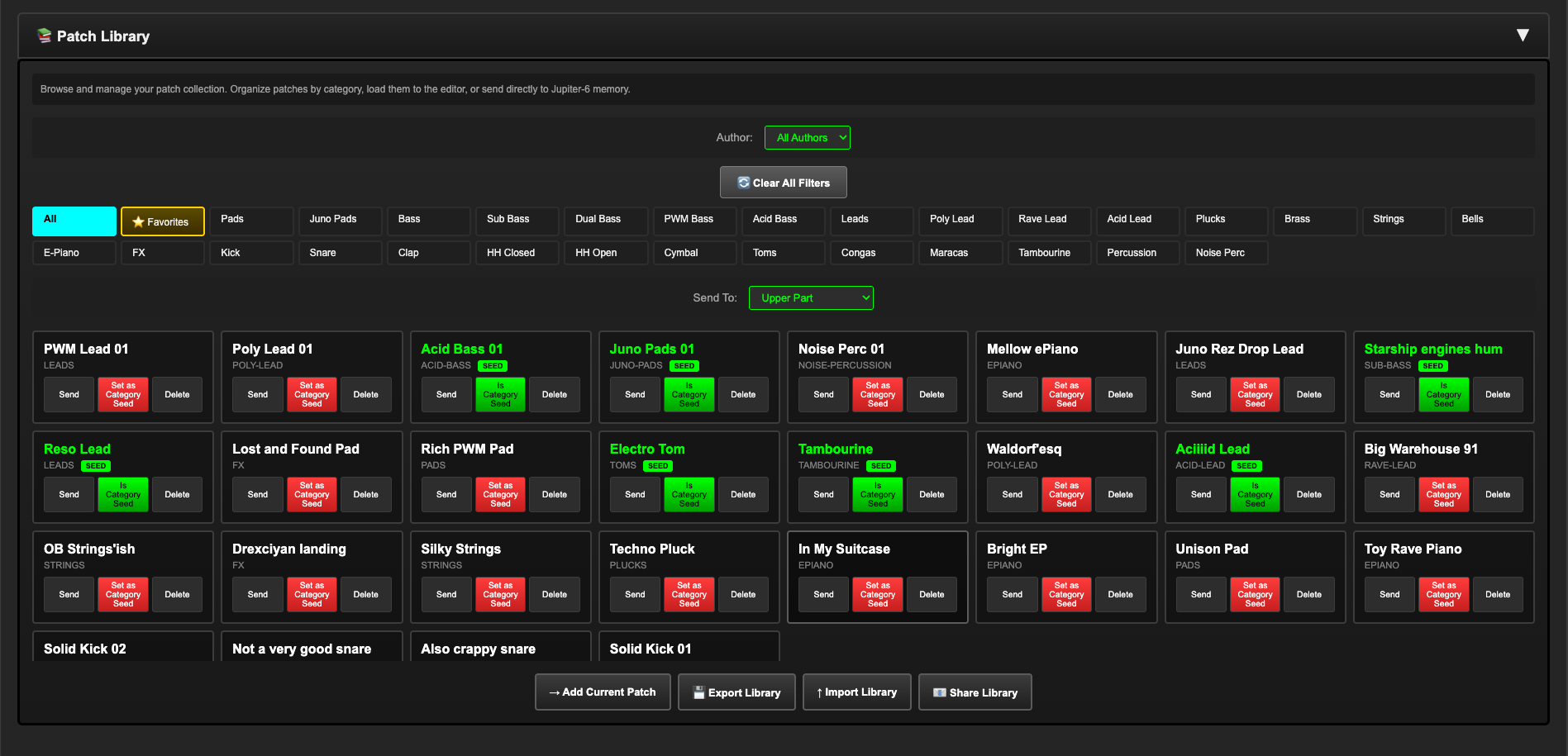
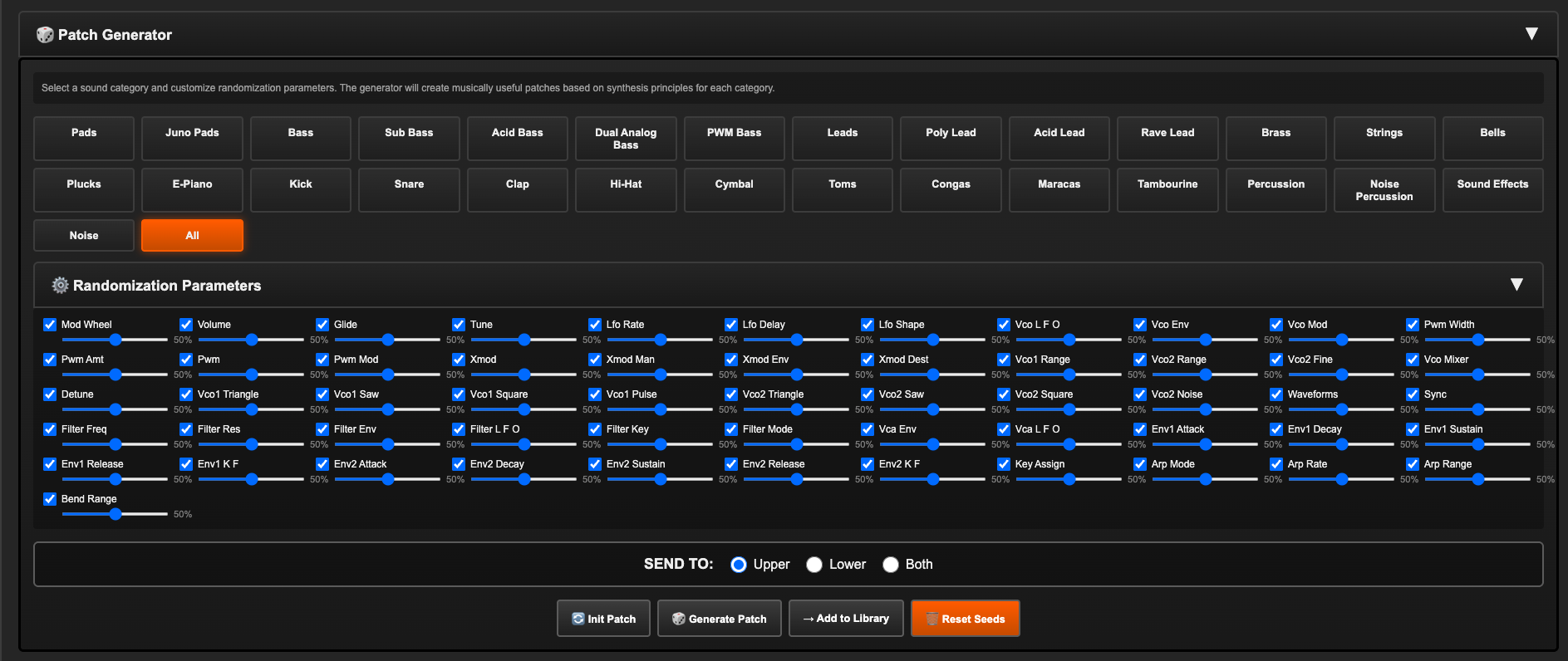
If you are lucky enough to own a Roland Jupiter-6, you already know how distinctive it is. It’s a powerful and characterful instrument, but also one that has often been misunderstood and under-integrated in modern workflows.
One of the main reasons is its very limited original MIDI implementation and its reliance on cassette-based patch storage, which meant the Jupiter-6 never developed a strong patch-sharing culture or deep integration with contemporary production systems.
Over the years, a small number of modifications have attempted to address these limitations. The Europa Mod was the most extensive, but it is no longer available or actively supported. The currently maintained and widely adopted solution is the Tauntek MIDI Mod, which is far less invasive and adds robust, reliable MIDI functionality to the Jupiter-6.
Building on the capabilities introduced by the Tauntek Mod, we have developed Deep Edit — a browser-based editor, librarian, and sequencer designed to take the Jupiter-6 significantly further into modern production and performance contexts.
Deep Edit is in active development, but it is fully usable today, with all core functionality working as intended. A detailed help section is available within the editor; what follows is a high-level overview of its design and capabilities.
Deep Edit is designed around the Jupiter-6’s dual-panel architecture, treating each panel as an independent but tightly integrated instrument.
This approach allows the Jupiter-6 to function as a far more flexible performance instrument than its original design allowed.
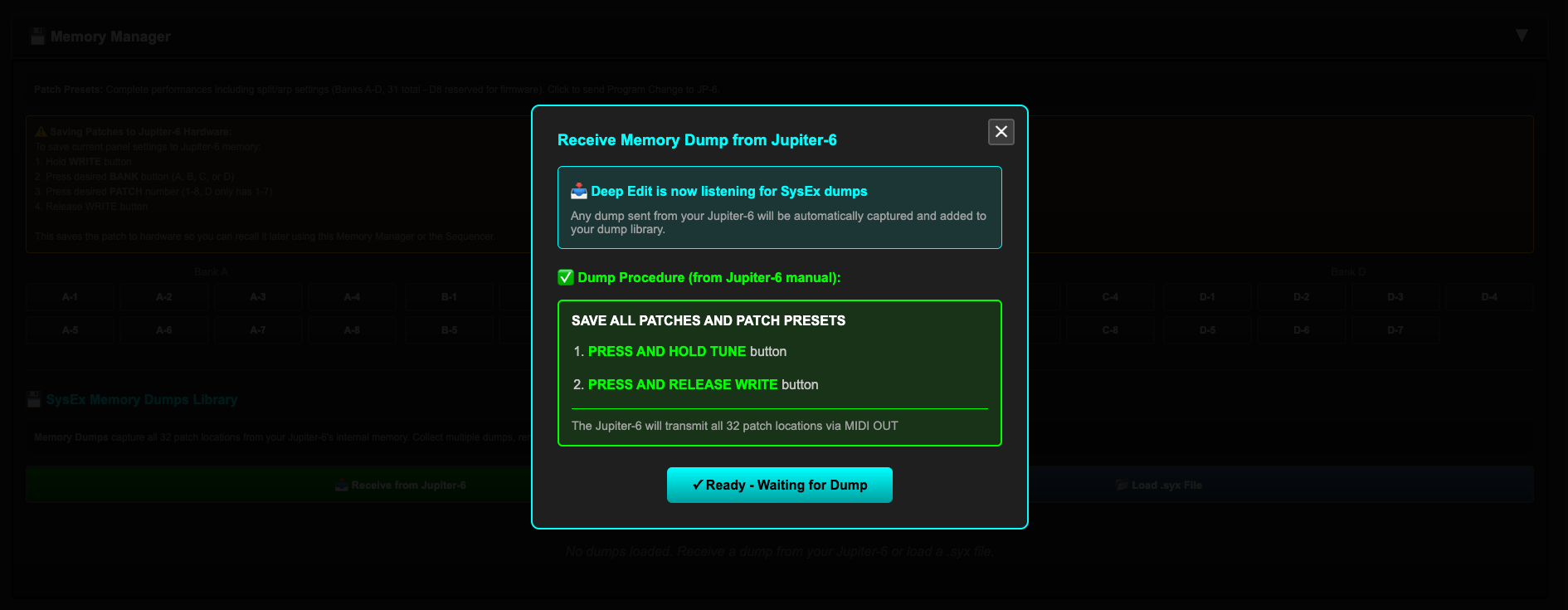
The Jupiter-6’s internal memory system is fully integrated into Deep Edit’s sequencer and memory manager.
This enables performances where patch changes are an active part of sequencing, rather than a static setup task.
Very little exists online in terms of shared Jupiter-6 patches. Deep Edit addresses this with a built-in Patch Library designed specifically for Tauntek-modified Jupiter-6 systems.
Once patches are created, they can be stored on the Jupiter-6 itself and recalled automatically as part of sequenced performances.
Deep Edit includes a patch generator with a unique seed-based workflow.
This allows exploratory sound design while still keeping results grounded in musically useful territory.
Each panel includes a two-lane step sequencer with deep automation support:
All automation data can be edited at the step level, making Deep Edit suitable for both structured composition and live performance.
Deep Edit is intended to give the Jupiter-6 the editor, librarian, and sequencing depth it never originally had, while respecting the character and architecture that make it unique.
It only works with Tauntek modified Jupiter 6’s and is designed to be used on the desktop, not mobile (mouse control required) with modern browsers such as Chrome or Edge which have midi support.
Deep Edit is offered free to use, with no implication of support.